
May 16, 1961
General Park Chung-hee seizes power in a military coup. This event marks the beginning of an authoritarian regime that aims to modernize the country while severely restricting political freedoms.
October 17, 1972
Park Chung-hee introduced the Yushin Constitution, strengthening his personal power. This turning point consolidated the dictatorship by justifying tight control of society in the name of national stability.
October 1973
A large military parade is organized in Seoul to demonstrate the strength of Park Chung-hee's regime. This show of force aims to legitimize the Yushin regime and intimidate opponents, at a time when democratic protests are beginning to gain momentum.
October 16–20, 1979
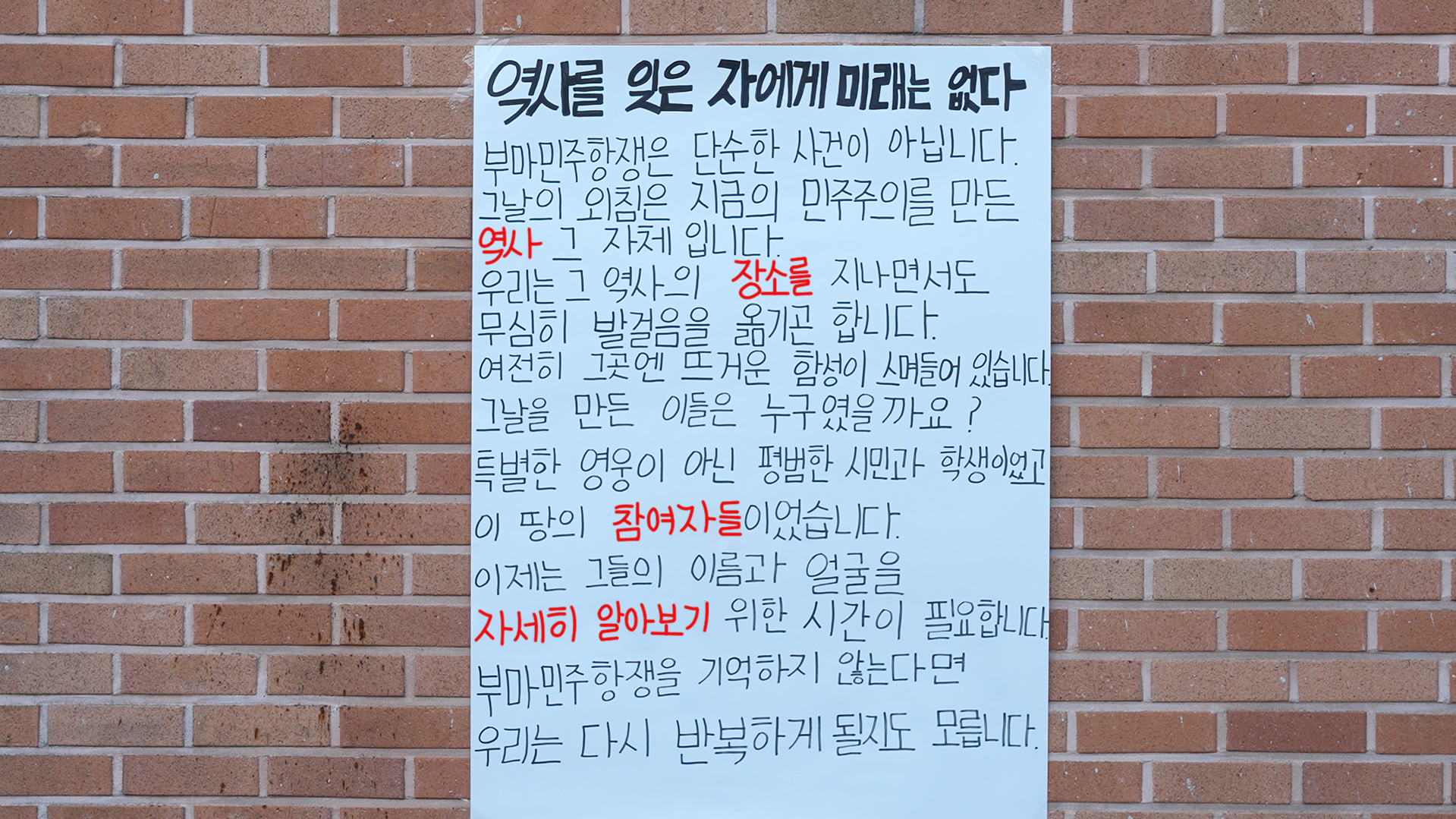
The Bu-Ma Uprising erupts in Busan and Masan, led by students and citizens. These protests reveal the extent of popular rejection of the Yushin regime and herald an impending political crisis.
October 26, 1979
Park Chung-hee is assassinated by the head of his intelligence services. This event brings an abrupt end to nearly two decades of dictatorship and ushers in a period of uncertainty.
May 18–27, 1980
The people of Gwangju rise up against the martial law imposed by Chun Doo-hwan's military regime. Student protests are violently suppressed, resulting in hundreds of deaths. This uprising becomes a defining moment in South Korean democracy.
June 10, 1987
A large protest movement, the “Great June Demonstration,” erupts to demand free elections. This democratic momentum continues the struggles against authoritarianism that began in the 1970s.
June 29, 1987
Under popular pressure, the military regime agrees to a process of democratization. A major victory for student and citizen movements.
December 1987
The first presidential elections by direct universal suffrage are held. Although the military initially retains power, a new political era begins.
February 25, 1993
Kim Young-sam becomes the first civilian president to be elected in over 30 years. A key step in the transition to democracy.
October 29, 2016
New protests are erupting against President Park Geun-hye, who is accused of corruption. These movements are part of a tradition of citizen mobilization.
March 10, 2017
Park Geun-hye is impeached by the Constitutional Court. A powerful symbol of a vigilant democracy.
May 10, 2017
Moon Jae-in is elected president, bringing a message of justice and reform.
October 16, 2019
The 40th anniversary of the Bu-Ma uprising is commemorated, recalling the importance of past democratic struggles.
December 2024
President Yoon Suk-yeol attempts to impose martial law. Faced with public pressure, the decision is overturned and he is impeached a few days later.
June 3, 2025
This ninth South Korean presidential election, held early following the impeachment of President Yoon Suk-yeol, resulted in the victory of Lee Jae-myung, who will serve as president for a non-renewable five-year term.